


AutoSmart Parts
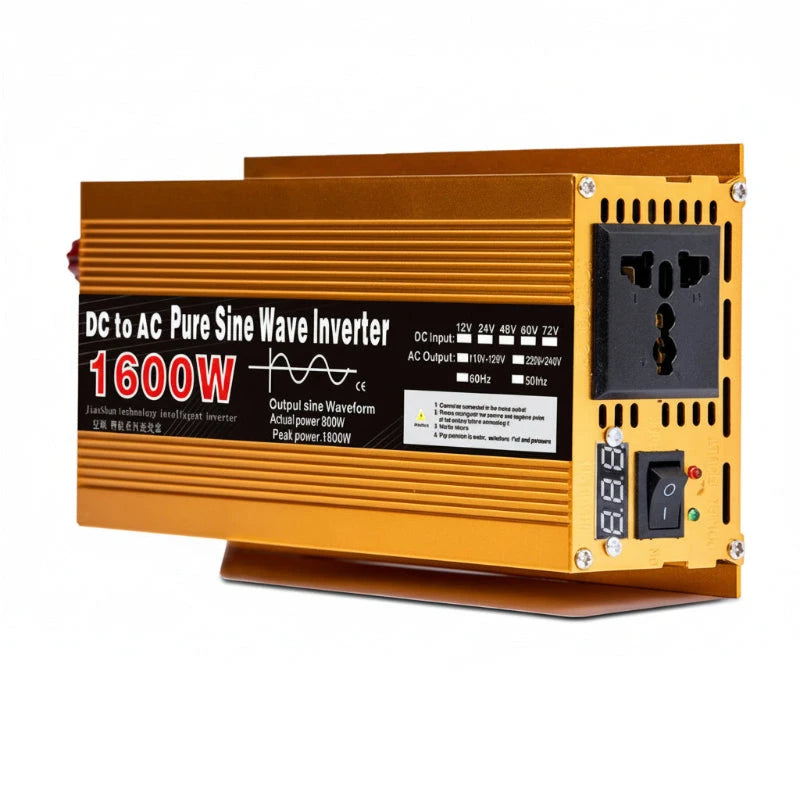
Pure Sine Wave Inverter 12V 1600W to 3000W for Solar Photovoltaic and RV
Sensitive electronics need a clean power source. The AceBlue pure sine wave inverter delivers stable 220V from a 12V or 24V system, safe for laptops, medical equipment and solar setups.
Regular price
$299.99 AUD
Regular price
$399.99 AUD
Sale price
$299.99 AUD
 Secure shipping
 Easy exchange
 24/7 support
 Pure sine wave, grid quality power output
Safe for fridges, washing machines, sensitive electronics
3 power options: 1600W, 2200W, 3000W peak
AceBlue brand, CE certified for solar and RV use
Quantity
Couldn't load pickup availability
Specifications
Specifications
Compatible With
Compatible With
What’s Included / Care Instructions
What’s Included / Care Instructions


Install Guide
1. Identify Battery Polarity
Confirm positive (+) and negative (-) terminals on your 12V battery. Wrong connection damages the inverter immediately.
2. Connect Battery Clips
Attach red clip to battery positive, black clip to negative. Use included thick wire for safe high current operation.
3. Switch On and Test
Power on the inverter. Plug your appliance into the universal AC socket. Monitor load and ensure it stays within the rated power (not just peak).
Common Questions Before You Buy
What's the difference between rated and peak power?
Rated (continuous) is what the inverter can run all day long. Peak is short burst for startup spikes. For example, a 1500W rated / 3000W peak inverter runs 1500W appliances continuously and handles 3000W spikes when motors start up.
Which wattage should I choose?
Add up your appliance wattages and pick a model with at least 20% headroom on rated power. 1600W peak is good for laptops, fans, small TVs. 2200W peak handles a fridge. 3000W peak runs power tools and bigger kitchen appliances.
Why pure sine wave and not modified?
Pure sine wave matches the power from your home grid, so any appliance runs safely without buzzing, flickering, overheating, or damage. Modified sine wave is fine for basic loads but unsafe for sensitive electronics or motor based appliances.
Can I use it on a solar system?
Yes. Connect to the 12V battery in your solar storage setup (not directly to panels). Works well as the inverter stage of a solar power system.
Will Australian 240V appliances work?
Output is 220V at 50Hz, within standard Australian appliance tolerance. Most appliances rated for 240V handle 220V fine since the range typically covers 220 to 240V.