


AutoSmart Parts
Car Power Inverter 12V 24V Multi Wattage 1000W to 6000W, Universal Socket
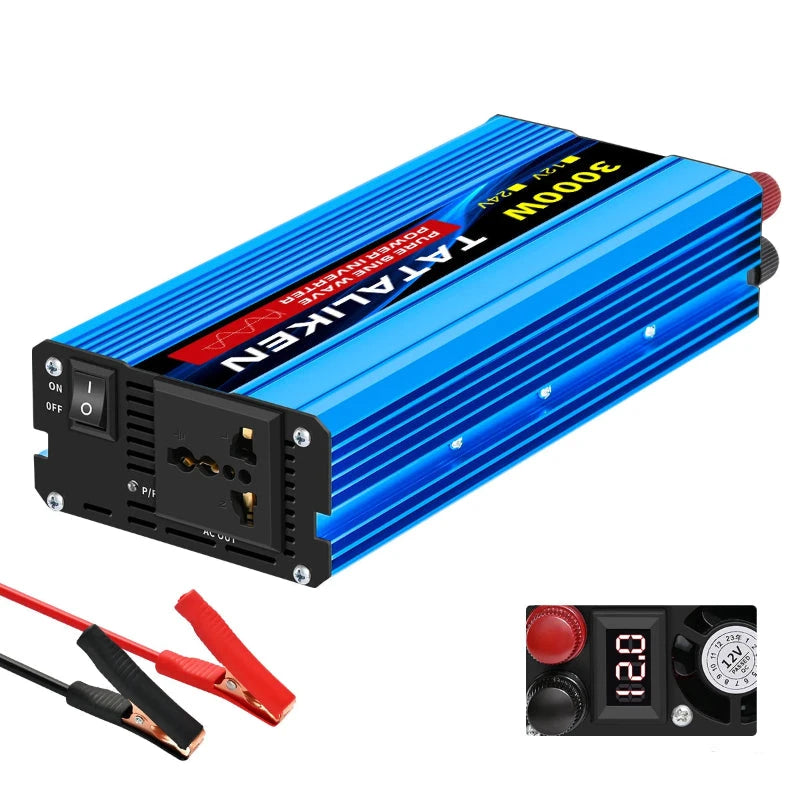
One brand, six power levels. The TATALIKEN inverter covers everything from a laptop to a worksite tool in 12V or 24V. Choose the wattage that matches your load. CE certified.
Regular price
$339.99 AUD
Regular price
$424.99 AUD
Sale price
$339.99 AUD
 Secure shipping
 Easy exchange
 24/7 support
 11 wattage and voltage variants to match your setup
12V variants: 1000W to 6000W (cars, RVs, vans)
24V variants: 1600W to 4000W (trucks, marine, solar)
Universal 220V socket, TATALIKEN brand CE certified
Quantity
Couldn't load pickup availability
Specifications
Specifications
Compatible With
Compatible With
What’s Included / Care Instructions
What’s Included / Care Instructions


How to Choose and Setup
1. Match Voltage to Battery
Cars and RVs use 12V. Larger trucks and dual battery configs use 24V. Pick the variant that matches your battery system, the wrong voltage will damage the inverter.
2. Choose Wattage
Add up your appliance wattages and pick a model with 20 to 30% headroom. 1000W for laptops and small loads. 3000W for mixed appliances. 6000W for heavy duty kitchen and tools.
3. Connect and Use
Connect red to battery positive, black to negative. Switch on, plug into the universal AC socket. Always confirm polarity before connecting.
Common Questions Before You Buy
12V or 24V, how do I know?
Standard cars, motorcycles, RVs, vans, and small boats are 12V. Larger trucks (semi trailers, heavy duty), marine boats, and dual battery solar banks are often 24V. Check your battery label or owner's manual.
Which wattage do I need?
Add up all appliances you'll run together. 1000W: laptop and lights. 2200W: fridge plus laptop. 3000W: kettle plus accessories. 4000W+: power tools, kitchen with microwave, heavy duty RV. Add 20-30% headroom for surge.
Will Australian appliances work?
Yes. Output is 220V at 50Hz, within Australian appliance tolerance (most appliances accept 220 to 240V). Universal socket may need a plug adapter for AU 3 pin appliances.
Is it pure sine wave?
Output waveform varies by wattage variant, check product images for the specific variant. For confirmed pure sine wave with grid quality output, see our other dedicated pure sine wave inverter listings.
What battery do I need for 6000W?
At 6000W, a 12V inverter draws around 500A. You need a deep cycle battery bank (multiple batteries in parallel) plus very thick cables (1/0 AWG or thicker). For sustained 6000W use, consider 24V system with smaller current draw.